Ragazzi, if you have clicked on this blog entry, you have just participated in an experiment which Annalena is conducting. She is trying to confirm something she thinks is the truth, and if she is right, as she always is, it is time we all 'fessed up.
She does not think there is a one of us out there who does not claim to want to eat healthier, and/or to eat more fruits and vegetables. To be more adventurous in our cooking. Is she right?
Well... it is an interesting bit of information that, without question, the heaviest "hits" on this blog, are for desserts. There are a few exceptions. For example, every week, there are well over 50 hits on the blog for braciole. But Annalena's last blog entries, on kohlrabi and quinces, are both in the single figures.
And if you've clicked on this, you've probably been part of the two dozen or so who will read it. A sweet bread recipe (as compared to sweetbreads).
Hmmm. What does that say about us collectively? Discuss
Well, nonetheless, we go foward. The temperature has dropped substantially, to the point where even Annalena's hot blood is cold, and she is pulling out sweaters and long sleeve turtlenecks. And the hard skin squash - of which pumpkin a member - abound.
You DID know that pumpkin is a squash, didn't you? Yes, indeed it is. And this is important to know because, ragazzi , it means that you can substitute the pulp of pumpkin with any of the winter squash, and vice versa (spaghetti squash may be an exception, but it is pretty much true).
This is of value to you, because pumpkin is a horror to cook. It is difficult to cut, it is very wet and throws off tons of liquid when it cooks, and because the flesh is stringy, you usually have to puree it to use it in other things. Yes, it is better than the canned stuff, but not THAT much better. So if you are a stickler for doing things from scratch, a pumpkin can be daunting. In this case, Annalena is giving you her cucinallean blessing to use the canned stuff.
Pumpkin bread is, like most of the breads which are based on vegetables (think zucchini, for example), an oil bread. We will be using neutral oil to make this, rather than butter.
This should NOT be taken as a signal that pumpkin bread is healthy. It IS better for you than, say, an Oreo, but it is NOT to be taken as permission to not eat your vegetables, because you are getting them in your dessert.
See? Annalena knows all of these tricks. She's tried them, too. But it is a good thing to make, and to have around. And as we will see it admits of a tremendous amount of variation.
Cominciamo.
You will need a cup of vegetable oil: canola, corn, soy, anything like that which has no flavor to it. No olive oil here, please. And 2.5 heaping cups of white sugar (so much for healthy, ragazzi). Now, Annalena is going to use "heaping" again later for the flour. That is because the recipe, as originally written, calls for 2 2/3 cup of sugar, and 3 1/3 cups of flour. Most of us do not have measuring cups in the thirds; however, 2 2/3 cups of sugar is 2.67, while 2.5 is, well, 2.5. So, you are looking at about .12 difference. If you heap the sugar in your measuring cup (so that you have a small mountain), you will have what you need for both.
You may want to use the blender for this, as the batter is going to be heavy. Mix up the sugar and oil together until they are well combined. It is going to look a lot like heavy sand. Not promising. And it will not get moreso when you add four large eggs, one at a time until they are combined well.
Things begin to look more promising when you add the one pound can of pumpkin. NOW things will begin to smooth out and look more even. Could this work?
Well, yes, it can. Now, turn off your mixer and add the 3 heaping cups of flour, together with half a teaspoon of baking soda, and 2 full teaspoons of baking powder. Also, it's time to spice your cake. What do you like? Annalena's original recipe called for nutmeg. Annalena likes nutmeg, but with pumpkin, prefers ginger. So a teaspoon of dried ginger here, and then, for fun, half a teaspoon of Chinese five spice powder. She emphasizes, however, that you should use what you like: cinnamon, nutmeg, even curry powder are good. Cardamom? Perhaps. And so on.
Combine all of this together until the flour disappears. Now, it's GOODIES time. You can add, up to 2.5 additional cups of "goodies" to this recipe. The orignal called for a cup of nuts and 1.5 cups of chocolate chips. Fine, but Annalena likes the taste of pumpkin. Too much stuff will kill the taste. But she does like crunch. So this recipe contains 1 cup of chopped pecans (Annalena's walnuts had gone rancid. TIP: ALWAYS TASTE NUTS BEFORE YOU ADD THEM TO SOMETHING YOU ARE COOKING, JUST IN CASE...). Again, add what you like, but keep in mind that the more you add, the heavier the batter, and the less it will rise.
Preheat your oven to 350, and then grease two 8x4 pans. These are bread pans, but not quick bread pans, which are 9x5. The reason for the switch is to let the stuff rise more. Divide the batter betwixt the two pans, put them in an oven, and wait. This is going to take at least an hour, so do something else while you are waiting. (Annalena made another cake, and did some Italian homework. An hour should give you plenty of time to...).
The cake is ready when it kind of cracks at the top, and when you insert a knife, you do not get what is clearly unbaked cake on the edge. If an hour is not sufficient, let it bake for longer.
Oil based cakes keep well, and are better tasting if you let them sit a day. So do so.
Note that if you prefer, you can make tons of muffins with this recipe. Just keep an eye and know that they will be ready in twenty minutes. Or, make two 9 or 8 inch layer cakes, and fill them with something like maple cream.
Fall has "fallen." Take advantage. We will be working with the produce of the autumn in days to come. Use them, because winter is not too far away, and here, where the ground freezes, local will be a memory all too soon
Sunday, October 7, 2012


Friday, October 5, 2012
Brought to you by the letter Q: quince and bleu cheese salad
Ragazzi, Annalena LOVES quinces. To her, they are one of the joys of the fall and winter. They do not make their appearance until just about now, and they are at their best, for about six weeks. At times, they bedevil her, as you will learn in this recipe. When they work, they are wonderful.
You may have to go and google for pictures of quinces. They are somewhat deceiving in appearance. Take a look:
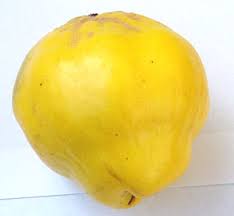
Looks like a big yellow apple doesn't it? But if you bite into it, expecting that crisp apple flesh and that burst of sweet and sour juice, you will get bitterness, graininess, and probably a broken tooth. Like lobsters, foie gras, and other wonderful things, a prize should be given to whomever figured out how to deal with them.
They say that quinces originated in Persia , but without question, if you want to know how to deal with them, ask an Armenian. Indeed, that is just what Annalena did. Well, sort of. See, she had a stack of backed up copies of one of her favorite "foodie" magazines, and there was a longish article on quinces. She read it while visiting with her friends Kevin and Chuck during her annual sojourn to South Hampton. In the course of that article, she learned of a book written by an Armenian woman, who also had much to say about the quince in the article. Now, Annalena has a stray recipe here and there for these kittens (they are also a darling of Ms. Waters, so they show up here and there), Peter Hoffman loves them, and in Annalena's extensive cookbook collection, she has a book she picked up in Switzerland on them (incidentally, the word for quince in German is Kwitten. Cotagna in Italian. See how smart you'll get?) She searched for the woman's book, found it in an on line used bookstore, and secured it.
The work is wonderful. More ideas than you can shake a stick at for using these guys.l They will be on Annalena's menu this fall and winter, and of course, you lucky readers will get them too.
The book gave as a "seminal" recipe, one for poaching quinces. Indeed, in Annalena's experience, it is vital that you cook quinces for a while before you do anything else with them. And the recipe seemed to accord with everything Annalena knew about cooking them: peel, core, cut into half inch slices, get into a big pot of water , cook slow, and for a long, long time. The recipe said 45 minutes, and commented that "even then, the quinces will be firm.
Annalena thought nothing of this, because of her own experiences. So last weekend, after the busywork of Saturday cooking was done , she did in fact take her two pounds of ripe quinces (sidebar: when buying quinces, SMELL them. They should have an exotic, fruity odor. LOOK at them. See that color above? You're looking for that bright yellow. Green quinces, will never ripen. NEVER. They will rot on your cabinet and leave very ugly marks on the wood from their acid. They will piss you off. You will vow never to use them again).
Yes, she writes from experience. Ok, now, let's get our quinces peeled. They peel like an apple, but now, the hard stuff begins, because quinces are... hard. The smaller knife you use for an apple will not work here. Get a big one. Get ready to be strong, and cut them down the middle, lengthwise. Now, put the cut sides down, and slice the halves into half inch slices or so. Get a smaller knife and cut out the seedy core.
Work quickly here, ragazzi, they brown. And now, get them in a pot with ample water. Squeeze in half a lemon (Annalena tosses the lemon peel in too), and add a stick of cinnamon. No sugar for doing this. Bring the pot to a boil, and let it then simmer slowly.
Remember all that stuff up above about long cooking? Well, Annalena must have wound up with some really tender quinces. At 45 minutes, she went to check. Her quinces had turned a light salmon color. And they were falling apart tender. Good with a stew, NOT good with quinces. So, rather than let them sit in the hot bath to cool, as directed, she fished them out. Not exactly beautiful slices, but they would suffice.
Undeterred, she peeled her remaining quinces, and repeated, but checked at 30 minutes. This time, she had pale ecru slices that were falling apart.
Do not ask this woman to explain. It happened. She expects fully that the next time around, at an hour, the quinces will feel like rocks. So, ragazzi, the lesson here, is CHECK. Check frequently. The thirty minute slices have more body to them, but they do not have the pink color. Still , they are delicious. Save the liquid if you like but take the cinnamon stick out (this makes a wicked cocktail when combined with wicked spirits. You can also add a cup of sugar and boil it down into a ridiculously wonderful syrup).
So we have our quince slices. Here's the first thing we're going to do with them. We are going to make salad. A really GOOD salad. And we're going to do it by taking well washed, soft lettuce leaves. Green leaf, red leaf, boston, anything of the type. Stay away from romaine, and arugula, etc, for this application (we will be revisiting arugula and fruit next time around). Tear the lettuces up, and put them in a big bowl. Now, get those quinces, be they slices, or fall apart slices. If they haven't fallen apart, tear them into small bits and put them on top of the lettuce. And... now for some bleu cheese. Whatever kind you like, but get something sharp tasting. Annalena chose mountain gorgonzola. Again, break off little bits of it, strew it over the salad like the quinces. Finally, your dressing. To Annalena's taste, this requires a mustard seed based dressing, so use whole grain mustard. Combine equal amounts of the mustard and a white wine or champagne vinegar, with a healthy teaspoon of salt. Annalena cannot tell you how much of each to use: how wet do you like your salads? Finally, combine two to three times the amount of olive oil, as the vinegar. Shake this all up, and pour it IMMEDIATELY over the salad. You do this because the seeds in the whole grain mustard will settle out and then, when you pour the dressing, you'll get one large PLOP of seeds in one place.
And, serve it forth. If you are so inclined, add some almonds, macrona almonds in particular, to the dish. But there's no need to.
And you have a wonderful autumn salad that is different from anything you've ever had (unless, of course, you're Armenian and your mom made this every day during the fall. ).
Enjoy, ragazzi. And Annalena shall send you more quince recipes as they come up.
Next time around, figs get the salad treatment.
Ti auguro un buon fin di settimana, i miei ragazzi!
You may have to go and google for pictures of quinces. They are somewhat deceiving in appearance. Take a look:
Looks like a big yellow apple doesn't it? But if you bite into it, expecting that crisp apple flesh and that burst of sweet and sour juice, you will get bitterness, graininess, and probably a broken tooth. Like lobsters, foie gras, and other wonderful things, a prize should be given to whomever figured out how to deal with them.
They say that quinces originated in Persia , but without question, if you want to know how to deal with them, ask an Armenian. Indeed, that is just what Annalena did. Well, sort of. See, she had a stack of backed up copies of one of her favorite "foodie" magazines, and there was a longish article on quinces. She read it while visiting with her friends Kevin and Chuck during her annual sojourn to South Hampton. In the course of that article, she learned of a book written by an Armenian woman, who also had much to say about the quince in the article. Now, Annalena has a stray recipe here and there for these kittens (they are also a darling of Ms. Waters, so they show up here and there), Peter Hoffman loves them, and in Annalena's extensive cookbook collection, she has a book she picked up in Switzerland on them (incidentally, the word for quince in German is Kwitten. Cotagna in Italian. See how smart you'll get?) She searched for the woman's book, found it in an on line used bookstore, and secured it.
The work is wonderful. More ideas than you can shake a stick at for using these guys.l They will be on Annalena's menu this fall and winter, and of course, you lucky readers will get them too.
The book gave as a "seminal" recipe, one for poaching quinces. Indeed, in Annalena's experience, it is vital that you cook quinces for a while before you do anything else with them. And the recipe seemed to accord with everything Annalena knew about cooking them: peel, core, cut into half inch slices, get into a big pot of water , cook slow, and for a long, long time. The recipe said 45 minutes, and commented that "even then, the quinces will be firm.
Annalena thought nothing of this, because of her own experiences. So last weekend, after the busywork of Saturday cooking was done , she did in fact take her two pounds of ripe quinces (sidebar: when buying quinces, SMELL them. They should have an exotic, fruity odor. LOOK at them. See that color above? You're looking for that bright yellow. Green quinces, will never ripen. NEVER. They will rot on your cabinet and leave very ugly marks on the wood from their acid. They will piss you off. You will vow never to use them again).
Yes, she writes from experience. Ok, now, let's get our quinces peeled. They peel like an apple, but now, the hard stuff begins, because quinces are... hard. The smaller knife you use for an apple will not work here. Get a big one. Get ready to be strong, and cut them down the middle, lengthwise. Now, put the cut sides down, and slice the halves into half inch slices or so. Get a smaller knife and cut out the seedy core.
Work quickly here, ragazzi, they brown. And now, get them in a pot with ample water. Squeeze in half a lemon (Annalena tosses the lemon peel in too), and add a stick of cinnamon. No sugar for doing this. Bring the pot to a boil, and let it then simmer slowly.
Remember all that stuff up above about long cooking? Well, Annalena must have wound up with some really tender quinces. At 45 minutes, she went to check. Her quinces had turned a light salmon color. And they were falling apart tender. Good with a stew, NOT good with quinces. So, rather than let them sit in the hot bath to cool, as directed, she fished them out. Not exactly beautiful slices, but they would suffice.
Undeterred, she peeled her remaining quinces, and repeated, but checked at 30 minutes. This time, she had pale ecru slices that were falling apart.
Do not ask this woman to explain. It happened. She expects fully that the next time around, at an hour, the quinces will feel like rocks. So, ragazzi, the lesson here, is CHECK. Check frequently. The thirty minute slices have more body to them, but they do not have the pink color. Still , they are delicious. Save the liquid if you like but take the cinnamon stick out (this makes a wicked cocktail when combined with wicked spirits. You can also add a cup of sugar and boil it down into a ridiculously wonderful syrup).
So we have our quince slices. Here's the first thing we're going to do with them. We are going to make salad. A really GOOD salad. And we're going to do it by taking well washed, soft lettuce leaves. Green leaf, red leaf, boston, anything of the type. Stay away from romaine, and arugula, etc, for this application (we will be revisiting arugula and fruit next time around). Tear the lettuces up, and put them in a big bowl. Now, get those quinces, be they slices, or fall apart slices. If they haven't fallen apart, tear them into small bits and put them on top of the lettuce. And... now for some bleu cheese. Whatever kind you like, but get something sharp tasting. Annalena chose mountain gorgonzola. Again, break off little bits of it, strew it over the salad like the quinces. Finally, your dressing. To Annalena's taste, this requires a mustard seed based dressing, so use whole grain mustard. Combine equal amounts of the mustard and a white wine or champagne vinegar, with a healthy teaspoon of salt. Annalena cannot tell you how much of each to use: how wet do you like your salads? Finally, combine two to three times the amount of olive oil, as the vinegar. Shake this all up, and pour it IMMEDIATELY over the salad. You do this because the seeds in the whole grain mustard will settle out and then, when you pour the dressing, you'll get one large PLOP of seeds in one place.
And, serve it forth. If you are so inclined, add some almonds, macrona almonds in particular, to the dish. But there's no need to.
And you have a wonderful autumn salad that is different from anything you've ever had (unless, of course, you're Armenian and your mom made this every day during the fall. ).
Enjoy, ragazzi. And Annalena shall send you more quince recipes as they come up.
Next time around, figs get the salad treatment.
Ti auguro un buon fin di settimana, i miei ragazzi!
Wednesday, October 3, 2012
kkkkkk kohlrabi and what to do with it

Ragazzi, one of the fun things about being a part of a CSA is having to learn how to deal with things you don't usually buy. Even with her vast levels of experience, Annalena has never really had much acquaintance with the vegetable pictured above (which can also be found in purple). Kohlrabi was not in her repertoire, but it WAS in the CSA box.
OK.... she thought to herself. "What would Alice do," meaning of course, Alice Waters. Guess what? Not a single recipe in any of her books, on the stuff. And so it went, with several of her books. "The Joy of Cooking" suggested peeling, boiling and covering with a white sauce.
Well, gee, that was helpful... NOT. BUT... there was a glimmer of hope. Buried in one of Mark Bittman's book was the tidbit that "kohlrabi are treated just like turnips." He gave no recipes, but using her incredible systematic and logical mind (no cracks here, ragazzi), Annalena looked up the turnip recipes, and indeed, she found one. She tried it.
She provides it here. It was OK, but not terrific. A second recipe was better, and in one of those situations where "you gotta have friends," Annalena gave some of them to her friend Maria, who is Latina, but new precisely what to do with this German/Eastern European vegetable. More on this below.
First, let Annalena get on her soap box on cookbooks. To the extent she found information on this thing, they all said "small ones may be cooked whole, but larger ones must be peeled."
Ok, this begs the question: what is large and what is small? Annalena has in fact seen some kohlrabis that were as big as her not insignificant head. Did she have small ones, or large ones? She peeled half of them, and did not peel the others.
News for all of you who wish to experiment with these critters. PEEL THEM completely. And then, look for the point where it gets very tough. If you cut these guys like coins, you will probably find a spot where your knife is giving you a fight. Don't argue, just don't use them.
Ok, so what do you do with these guys? Well, if you are lucky enough to get them with the greens still attached, use them any way you would use turnip greens (and keep in mind that, in Italy, broccoli di rapi is "cima" or turnip greens. So if you like orecchiete with broccoli rabb and don't have any of it around, use the leaves. Do know they are a bit on the tough side. The stems? COMPOST. But the bulbs. Ok, Annalena is going to give you two recipes because one is a "putting it together recipe" based on one she's already posted, and the other is a really simple one. The latter is really ONLY for turnip lovers.
"Putting it together." Way back when, Annalena posted a recipe for a potato gratin. You sliced potatoes, put them under milk, added salt, boiled the thing, poured it into a greased pan, and baked. Well, you're gonna do that again this time, only you're going to use equal amounts of sliced kohlrabi and potatoes. To review, peel both vegetables. Cut them into thin, round slices. Put them in a pot, and add whole or 2% milk, just to cover. Over low heat, bring this just to a boil, pull it away from the stove, and pour it into a glass or ceramic baking dish (or two), that you've buttered. Remember to add salt to the milk. Put t his into the oven at 400, and bake for 30-45 minutes, until it's brown and the milk is no longer liquid.
For the turnip lovers: after you have prepped the veggies, cut them into wedges. You should probably aim for 6-8 wedges per kohlrabi. Now, put these in a pot with COLD, salted water, and bring to a boil. Cook them until they are not quite done. You know what that means: a knife stuck into them goes in a bit, but not all the way. Drain them. Put the kohlrabi back into the pot, and add water just to about half the depth of the veggies. Add two or three tablespoons of butter and bring it to a fast boil, uncovered. The water will boil off and eventually, you will be braising the veggies in butter. They will brown somewhat, and you should plan on doing some stirring. When they are soft enough for your taste, they are done.
Well... not quite. This is a very white, bland looking vegetable once it is peeled. So Annalena chopped up some hazelnuts and put them over the critters. That was a good idea. Parsley would have been good too. And, let's face it: is there anything that is not improved with a dusting of grated cheese?
Annalena plans to try her friend Maria's stew recipe, and shall report back. Be adventurous ragazzi. Remember, somewhere in time, SOMEONE was the first person to eat a lobster, a truffle, a foie gras. Honor your ancestors.
Next time around, we visit the neglected world of the letter Q and work with quinces. An Annalena favorite.
Alla prossima.
Sunday, September 30, 2012
Putting it together: how Annalena makes a meal: eggplant pizza
This one, ragazzi, is a bit of an experiment. Annalena dedicates it to all of her readers who look at the recipes and WANT to cook, but wonder, perhaps "HOW does she put it together? I could never do that?"
Yes , ragazzi, you can. And Annalena is going to show you how, using recipes that are on this blog.
We are , again, using an ingredient which is about to fade from our local markets: eggplant. One of Annalena's favorites. And perfect here, because in case you want to make your own pizza, and you have a vegetarian with which to share it, there are few better substitutes for meat, than eggplant.
Now, Annalena is going to give you instructions on how to do this, start to finish, in about an hour and a half. If you do things the way she does though, and make the ingredients separately, it will take you far less time. In other words, when Annalena has space, she makes each of these ingredients. Then, she just pulls it together.
Would that the rest of her life were that easy.
Ok, so here's how we're going to order it. First, we are going to cook the eggplant. And this is a recipe that all of her health freak fans are going to love, because we're all used to frying breaded eggplant. Nope, not here. First, preheat your oven to 425. While that is happening, get a really big eggplant, and peel and slice it, into rounds, of say 1/3 of an inch. Now, follow the recipe for oven fried tomatoes, which follows, only use bread crumbs instead of cracker crumbs:
http://annalenacantacena.blogspot.com/2012/09/seasons-change-oven-fried-tomatoes-and.html
The next step is one you could start before you make the eggplant, or now. In fact, maybe it is better to start it first. We're going to make the sauce. And it's going to take less than an hour. You remember this one, yes?
http://annalenacantacena.blogspot.com/2012/06/relearning-annalena-rethinks-her-tomato.html
So, now you have your sauce and your eggplant. What about your crust? Here again, Annalena to the rescue. Again, perhaps this is best done first of all, since it needs the time to rise:
http://annalenacantacena.blogspot.com/2007/11/pizza.html
So, if you were doing this in some kind of order, you might make the crust dough first (and you'd have enough for two pies), let it rise, and put the sauce on the stove, while you prepped the eggplant.
If you go through the actual amount of WORK you do here, it will come to less than about 20 minutes. Seriously. You can handle this.
Now, roll out your dough, spread some of that sauce over it (and you have plenty to use for other things), put slices of eggplant on top of that, and then your cheese. As always, use the good stuff. With eggplant, Annalena prefers smoked mozzarella, but it's YOUR pizza, not hers. So use what you like. If you have some fresh basil leaves around, as they say "smoke em if you got em."
And there's your pizza. It's gonna be good, hot, and you will thank Annalena immensely.
Next time around: perhaps we will visit the kohlrabi, as promised awhile ago (Annalena loses her grip sometime), but just maybe we will be investigating the case of the disintegrating quince.
Yes, ragazzi, it is true. Annalena is in need of a life.
Yes , ragazzi, you can. And Annalena is going to show you how, using recipes that are on this blog.
We are , again, using an ingredient which is about to fade from our local markets: eggplant. One of Annalena's favorites. And perfect here, because in case you want to make your own pizza, and you have a vegetarian with which to share it, there are few better substitutes for meat, than eggplant.
Now, Annalena is going to give you instructions on how to do this, start to finish, in about an hour and a half. If you do things the way she does though, and make the ingredients separately, it will take you far less time. In other words, when Annalena has space, she makes each of these ingredients. Then, she just pulls it together.
Would that the rest of her life were that easy.
Ok, so here's how we're going to order it. First, we are going to cook the eggplant. And this is a recipe that all of her health freak fans are going to love, because we're all used to frying breaded eggplant. Nope, not here. First, preheat your oven to 425. While that is happening, get a really big eggplant, and peel and slice it, into rounds, of say 1/3 of an inch. Now, follow the recipe for oven fried tomatoes, which follows, only use bread crumbs instead of cracker crumbs:
http://annalenacantacena.blogspot.com/2012/09/seasons-change-oven-fried-tomatoes-and.html
The next step is one you could start before you make the eggplant, or now. In fact, maybe it is better to start it first. We're going to make the sauce. And it's going to take less than an hour. You remember this one, yes?
http://annalenacantacena.blogspot.com/2012/06/relearning-annalena-rethinks-her-tomato.html
So, now you have your sauce and your eggplant. What about your crust? Here again, Annalena to the rescue. Again, perhaps this is best done first of all, since it needs the time to rise:
http://annalenacantacena.blogspot.com/2007/11/pizza.html
So, if you were doing this in some kind of order, you might make the crust dough first (and you'd have enough for two pies), let it rise, and put the sauce on the stove, while you prepped the eggplant.
If you go through the actual amount of WORK you do here, it will come to less than about 20 minutes. Seriously. You can handle this.
Now, roll out your dough, spread some of that sauce over it (and you have plenty to use for other things), put slices of eggplant on top of that, and then your cheese. As always, use the good stuff. With eggplant, Annalena prefers smoked mozzarella, but it's YOUR pizza, not hers. So use what you like. If you have some fresh basil leaves around, as they say "smoke em if you got em."
And there's your pizza. It's gonna be good, hot, and you will thank Annalena immensely.
Next time around: perhaps we will visit the kohlrabi, as promised awhile ago (Annalena loses her grip sometime), but just maybe we will be investigating the case of the disintegrating quince.
Yes, ragazzi, it is true. Annalena is in need of a life.
Tuesday, September 25, 2012
Soup season begins: roasted eggplant and tomato soup
The regular readers of these pages will recall that, comes post Labor Day, the Guyman goes back to music rehearsals. That means late night suppers. And, for us, that means soup, pizza and salad. Annalena will update you with soup recipes as she develops them - assuming that they are new. For example, whilst we are in week the third, the first soup was cold corn soup, which you have in your archives. Just look it up. Second week was squash soup which, as she thinks about it, Annalena probably did not give you. Mi dispiace. We will see about putting it up. But for today, we stick our heads in the oven, and roast our vegetables for a really delicious, substantial soup. One that also, by the way, is almost fat free (Ms. Em, are you listening?)
Few vegetables are as misunderstood, as eggplants are. What Annalena means by this, is that many people THINK they like them, but actually like eggplant as a carrier for other things. Step back a minute and think: when you have eggplant parmagiana, can you pick the flavor of eggplant out of that mouthful? Annalena thinks not. When you eat baba ghanouj, how about picking eggplant out of the tahini? Again, very difficult to do , isn't it? Fact of the matter is, eggplant is one of those vegetables that seems to add more texture than flavor to things. Many people think of it as a meat substitute, because it is dense, chewy, and picks up flavors, but let's revisit eggplant and treat it for what it is.
This soup does use other ingredients, but the star is the eggplant. And Annalena assures you, you will taste it. And you will like it.
Let us start with our ingredients. You will need eggplants, plum tomatoes (you do need the plum variety here), a large onion, and about six cloves of garlic. You should have twice as much eggplant as you do tomatoes. So, if you have two pounds of eggplant.... Approximations are fine, especially if there is a higher ratio of eggplant to tomato than 2:1 You CAN also use basil or pesto with this, if you like. To keep it more fat free, use the basil leaves rather than the pesto.
Preheat your oven to 425. Cut the blossom end off of your eggplants and then cut them in half, lengthwise. Do the same with your plum tomatoes. Cut your onion in quarters, and peel it. Now, do one of two things: EITHER rub two baking sheets with olive oil (do not be skimpy), OR line them with parchment paper, and rub olive oil over the cut surface of the tomatoes and the eggplant, and rub it on the onion and garlic.
If you do not use the parchment paper, you will get a browner, more "roasty" tasting soup, but cleanup will be more difficult. If you use the parchment, you will still get some smokiness, but not the same amount, and clean up will be simple. Your choice.
Put the eggplant, cut side down on one baking sheet, with the onion and the garlic. Put the tomatoes on the other one, cut sides UP. Sprinkle a little salt on them.
Bake these guys for about forty minutes. After twenty, reverse the position in the oven, and at twenty, check your garlic. If it's soft and tender, take it out, and put it in a bowl. If not, let it continue to roast. When you can push the eggplant and get no resistance, your veggies are done. Get them out of the oven, dump them all into a bowl, and let them cool. You'll notice, even if you used the parchment, that the tomatoes and eggplants have browned a bit. The onion will have softened.
It is VERY important that you show some patience here, because these vegertables are very, very hot. When they do cool down, scrape the pulp from the eggplant. If you get some of the skin, it's no big deal, but don't take too much of it.
Now, get those veggies into a blender. You don't have to peel the garlic. Seriously, you don't. If your blender isn't big enough, do this in two batches. If you are inclined, this is the time to add the basil leaves, or the pesto.
You will not need liquid, because the juice of the tomatoes, and the water in the eggplant will be sufficient to make a puree; however, you must stand back now and look at it, because this is THICK. If you are fonder of thinner soups, do use water, or vegetable stock or chicken stock to thin it, but know that the delicate flavor of the eggplant will become more diluted. To Annalena's taste, better to have a small bowl of the thick stuff.
Taste. Adjust your seasonings. Eggplant needs a fair piece of salt, so be ready.
And there you are. A soup that uses the tail ends of what summer has given us so bountifully. You may be surprised how little this makes: Annalena got just over a quart, but it is difficult to eat much of this.
Soon, ragazzi, Annalena tangles with a vegetable she has not cooked more than once: kohlrabi.
Few vegetables are as misunderstood, as eggplants are. What Annalena means by this, is that many people THINK they like them, but actually like eggplant as a carrier for other things. Step back a minute and think: when you have eggplant parmagiana, can you pick the flavor of eggplant out of that mouthful? Annalena thinks not. When you eat baba ghanouj, how about picking eggplant out of the tahini? Again, very difficult to do , isn't it? Fact of the matter is, eggplant is one of those vegetables that seems to add more texture than flavor to things. Many people think of it as a meat substitute, because it is dense, chewy, and picks up flavors, but let's revisit eggplant and treat it for what it is.
This soup does use other ingredients, but the star is the eggplant. And Annalena assures you, you will taste it. And you will like it.
Let us start with our ingredients. You will need eggplants, plum tomatoes (you do need the plum variety here), a large onion, and about six cloves of garlic. You should have twice as much eggplant as you do tomatoes. So, if you have two pounds of eggplant.... Approximations are fine, especially if there is a higher ratio of eggplant to tomato than 2:1 You CAN also use basil or pesto with this, if you like. To keep it more fat free, use the basil leaves rather than the pesto.
Preheat your oven to 425. Cut the blossom end off of your eggplants and then cut them in half, lengthwise. Do the same with your plum tomatoes. Cut your onion in quarters, and peel it. Now, do one of two things: EITHER rub two baking sheets with olive oil (do not be skimpy), OR line them with parchment paper, and rub olive oil over the cut surface of the tomatoes and the eggplant, and rub it on the onion and garlic.
If you do not use the parchment paper, you will get a browner, more "roasty" tasting soup, but cleanup will be more difficult. If you use the parchment, you will still get some smokiness, but not the same amount, and clean up will be simple. Your choice.
Put the eggplant, cut side down on one baking sheet, with the onion and the garlic. Put the tomatoes on the other one, cut sides UP. Sprinkle a little salt on them.
Bake these guys for about forty minutes. After twenty, reverse the position in the oven, and at twenty, check your garlic. If it's soft and tender, take it out, and put it in a bowl. If not, let it continue to roast. When you can push the eggplant and get no resistance, your veggies are done. Get them out of the oven, dump them all into a bowl, and let them cool. You'll notice, even if you used the parchment, that the tomatoes and eggplants have browned a bit. The onion will have softened.
It is VERY important that you show some patience here, because these vegertables are very, very hot. When they do cool down, scrape the pulp from the eggplant. If you get some of the skin, it's no big deal, but don't take too much of it.
Now, get those veggies into a blender. You don't have to peel the garlic. Seriously, you don't. If your blender isn't big enough, do this in two batches. If you are inclined, this is the time to add the basil leaves, or the pesto.
You will not need liquid, because the juice of the tomatoes, and the water in the eggplant will be sufficient to make a puree; however, you must stand back now and look at it, because this is THICK. If you are fonder of thinner soups, do use water, or vegetable stock or chicken stock to thin it, but know that the delicate flavor of the eggplant will become more diluted. To Annalena's taste, better to have a small bowl of the thick stuff.
Taste. Adjust your seasonings. Eggplant needs a fair piece of salt, so be ready.
And there you are. A soup that uses the tail ends of what summer has given us so bountifully. You may be surprised how little this makes: Annalena got just over a quart, but it is difficult to eat much of this.
Soon, ragazzi, Annalena tangles with a vegetable she has not cooked more than once: kohlrabi.
Monday, September 24, 2012
Sunday supper with some new friends: baked fennel and radicchio pasta
There is no denying the change of seasons, ragazzi. Annalena's source of berries, which has provided them at 4/10 for months, has raised their prices. Scarcity does that. Grapes are at their peak. Apples, apples everywhere. Pears. Figs. And Annalena's beloved quinces have arrived for their brief appearance (we'll be doing more with quinces this year, ragazzi, let me tell you). And a reappearance by that most deceptive of vegetables: radicchio.
To look at radicchio is to love it: beautiful dark red leaves, streaked with white, perhaps with some green spots. It just looks so... inviting.
And you bite into it, and.... bitter. So, so bitter. Well, not so, so bitter, but if you are expecting the sweetness of green leaf lettuce, you are in for a surprise. So, too, if you fall into the trap of "it's red, it must be sweet," as so many do. If you like the flavor of raw radicchio, as Annalena does, there is no problem here. If you do not... there are ways of taming it. As we shall learn.
Also, a vegetable which Annalena's fans will know she favors: fennel Fennel does well in colder weather, so it is everywhere now, much to Annalena's delight. This is another "trickster." You see those big fronds and think dill. Not so much. And in many ways, it looks so much like celery.
So, your first time biting into some fennel and getting the strong anise flavor , much akin to licorice, will surprise you. Again, if you like it, we are fine. If not, well...
And again, there are ways to tame it. And actually, if you like sausage, you like fennel. It is almost impossible to make delicious sausage without some fennel seed. So you know the flavor.
Today, we are going to use both of them, in a dish that is going to involve some work. Not MUCH work, but more than we've done in many of these dishes. And it is going to be a vegetarian dish that has the feel of meat in your mouth. (Annalena is watching, ragazzi. Let us not make jest of this comment).
The title speaks of Sunday supper, because for Annalena, an ideal Sunday supper is some baked pasta, a green salad, some bread, and fruit. But in fact, the Guyman and Annalena ate this for Thursday night supper, as Sunday is the cook's night off. It IS ideal for that Sunday meal, however, because it makes a lot, ultimately it is fancy enough to make people feel they are special, but not so fancy to freak them out. You can serve it to your vegetarian friends (although not your vegan buddies), and they will wonder why you served them meat. Your meat eating friends will insist you are lying when you tell them that you have served them a vegetarian dish. So, let them bicker. You, caro, (or cara), sit at the head of the table , smile, grit your teeth and say "I love my friends, I love my friends, I love my friends," because ultimately, you do. Else they would not be at your table.
Ok, ragazzi, let's get to work here. There is a prerequisite: you need three to four cups of tomato sauce. Now, if you have been a naughty child and do not have such in your fridge or freezer, you will find at least three or four different sauce recipes within this blog. (If you are using stuff out of a jar, Annalena will smite you. Yes, she will). Put that homemade sauce aside, whilst you prepare the vegetables.
First, the fennel. Two large bulbs of it please. Cut away the fronds (save them if you are making fish that week: they are superb with fish, even better in a seafood risotto), and also those long arms. (We traditional Italians eat them at the end of a meal to sweeten our breath. Sadly, this tradition is not much in use anymore. Another sign of the deterioration of standards, we bemoan). Take the remaining bulbs, and slice them into rings. Combine them with rings of a large onion in one bowl.
Next, a couple of heads of radicchio. Chop these into small bits. No need for surgical precision here, but do make them small. Separate bowl for these guys.
Get a really big pan, and combine two tablespoons of butter, and two of olive oil. When it is warm, add the onion, the fennel, and a pinch of salt. Don't move them around much at first, but after about five minutes, do some stirring. Stir, and desist, stir and desist, for you want a slight brown color to the stuff. It should take 10-15 minutes. Now add the radicchio. This is going to heap your pan pretty high, so use some care in mixing it in. It will collapse, as all greens do, and again, watch for the color change. Cooking radicchio is interesting: the red turns to a very dark purple, which you either like or hate , and the bitterness goes out and the radicchio sweetens. This also happens when you grill it. You cook this for about ten minutes, until the leaves are browning as well (do NOT remove the fennel during this process).
So you will have spent about twenty minutes cooking your vegetables. When they're done, put them in a bowl to cool.
Normally, Annalena would tell you to do the next step, simultaneously with the cooking of the vegetables; however, it is important to have them cool, so do it next. Combine two cups of good ricotta (and remember, ragazzi, ricotta with a name that ends with an "o," is NOT good ricotta), with a cup and a half of grated fontina cheese. (A "truc" as the French say, for grating fontina, which can be frustrating: put it in your freezer for 10-15 minutes before you grate it. Firming it up will make it easier to grate). And grate an extra half cup, and put that on the side.
Now, for the pasta. This recipe was originally one for stuffed shells. 48 of them. If any of you think Annalena is mad enough to stand there and stuff 48 shells, you are wrong. So, use a large shaped pasta. Annalena chose something called "calamari" because it is the shape of rings of squid. If you happen to have the large shells, use them, but pace pace, do not stuff them. They will be fine as we make them. You need a pound of pasta, which you cook to a bit firmer than al dente in rapidly boiling salted water. Drain the stuff.
You needed a big pot to cook that pasta. Let's use it again. Put the pasta back in the pot , off the heat, and stir in the vegetables, and then the cheese mixture. Turn your oven to 375. Now, take that sauce (we didn't forget), and put half of it on the bottom of a 9x13 inch pan. Put the pasta mixure in, and pour the rest of the sauce over that. And finally, sprinkle the last half cup of cheese over the mass . Put it on a baking sheet to help maneuver it, and get it in that oven, for about 35-40 minutes. Take a look after 30, because you're looking for that top fontina, to brown.
PHEW. You worked, didn't you? But you have enough pasta here to serve at least 8, probably as many as 12. Or, if there aren't that many of you, you have meals to spare, as this will freeze wonderfully.
This is the kind of food that hugs you. We all need that from time to time, don't we?
Abracci dal Annalema
To look at radicchio is to love it: beautiful dark red leaves, streaked with white, perhaps with some green spots. It just looks so... inviting.
And you bite into it, and.... bitter. So, so bitter. Well, not so, so bitter, but if you are expecting the sweetness of green leaf lettuce, you are in for a surprise. So, too, if you fall into the trap of "it's red, it must be sweet," as so many do. If you like the flavor of raw radicchio, as Annalena does, there is no problem here. If you do not... there are ways of taming it. As we shall learn.
Also, a vegetable which Annalena's fans will know she favors: fennel Fennel does well in colder weather, so it is everywhere now, much to Annalena's delight. This is another "trickster." You see those big fronds and think dill. Not so much. And in many ways, it looks so much like celery.
So, your first time biting into some fennel and getting the strong anise flavor , much akin to licorice, will surprise you. Again, if you like it, we are fine. If not, well...
And again, there are ways to tame it. And actually, if you like sausage, you like fennel. It is almost impossible to make delicious sausage without some fennel seed. So you know the flavor.
Today, we are going to use both of them, in a dish that is going to involve some work. Not MUCH work, but more than we've done in many of these dishes. And it is going to be a vegetarian dish that has the feel of meat in your mouth. (Annalena is watching, ragazzi. Let us not make jest of this comment).
The title speaks of Sunday supper, because for Annalena, an ideal Sunday supper is some baked pasta, a green salad, some bread, and fruit. But in fact, the Guyman and Annalena ate this for Thursday night supper, as Sunday is the cook's night off. It IS ideal for that Sunday meal, however, because it makes a lot, ultimately it is fancy enough to make people feel they are special, but not so fancy to freak them out. You can serve it to your vegetarian friends (although not your vegan buddies), and they will wonder why you served them meat. Your meat eating friends will insist you are lying when you tell them that you have served them a vegetarian dish. So, let them bicker. You, caro, (or cara), sit at the head of the table , smile, grit your teeth and say "I love my friends, I love my friends, I love my friends," because ultimately, you do. Else they would not be at your table.
Ok, ragazzi, let's get to work here. There is a prerequisite: you need three to four cups of tomato sauce. Now, if you have been a naughty child and do not have such in your fridge or freezer, you will find at least three or four different sauce recipes within this blog. (If you are using stuff out of a jar, Annalena will smite you. Yes, she will). Put that homemade sauce aside, whilst you prepare the vegetables.
First, the fennel. Two large bulbs of it please. Cut away the fronds (save them if you are making fish that week: they are superb with fish, even better in a seafood risotto), and also those long arms. (We traditional Italians eat them at the end of a meal to sweeten our breath. Sadly, this tradition is not much in use anymore. Another sign of the deterioration of standards, we bemoan). Take the remaining bulbs, and slice them into rings. Combine them with rings of a large onion in one bowl.
Next, a couple of heads of radicchio. Chop these into small bits. No need for surgical precision here, but do make them small. Separate bowl for these guys.
Get a really big pan, and combine two tablespoons of butter, and two of olive oil. When it is warm, add the onion, the fennel, and a pinch of salt. Don't move them around much at first, but after about five minutes, do some stirring. Stir, and desist, stir and desist, for you want a slight brown color to the stuff. It should take 10-15 minutes. Now add the radicchio. This is going to heap your pan pretty high, so use some care in mixing it in. It will collapse, as all greens do, and again, watch for the color change. Cooking radicchio is interesting: the red turns to a very dark purple, which you either like or hate , and the bitterness goes out and the radicchio sweetens. This also happens when you grill it. You cook this for about ten minutes, until the leaves are browning as well (do NOT remove the fennel during this process).
So you will have spent about twenty minutes cooking your vegetables. When they're done, put them in a bowl to cool.
Normally, Annalena would tell you to do the next step, simultaneously with the cooking of the vegetables; however, it is important to have them cool, so do it next. Combine two cups of good ricotta (and remember, ragazzi, ricotta with a name that ends with an "o," is NOT good ricotta), with a cup and a half of grated fontina cheese. (A "truc" as the French say, for grating fontina, which can be frustrating: put it in your freezer for 10-15 minutes before you grate it. Firming it up will make it easier to grate). And grate an extra half cup, and put that on the side.
Now, for the pasta. This recipe was originally one for stuffed shells. 48 of them. If any of you think Annalena is mad enough to stand there and stuff 48 shells, you are wrong. So, use a large shaped pasta. Annalena chose something called "calamari" because it is the shape of rings of squid. If you happen to have the large shells, use them, but pace pace, do not stuff them. They will be fine as we make them. You need a pound of pasta, which you cook to a bit firmer than al dente in rapidly boiling salted water. Drain the stuff.
You needed a big pot to cook that pasta. Let's use it again. Put the pasta back in the pot , off the heat, and stir in the vegetables, and then the cheese mixture. Turn your oven to 375. Now, take that sauce (we didn't forget), and put half of it on the bottom of a 9x13 inch pan. Put the pasta mixure in, and pour the rest of the sauce over that. And finally, sprinkle the last half cup of cheese over the mass . Put it on a baking sheet to help maneuver it, and get it in that oven, for about 35-40 minutes. Take a look after 30, because you're looking for that top fontina, to brown.
PHEW. You worked, didn't you? But you have enough pasta here to serve at least 8, probably as many as 12. Or, if there aren't that many of you, you have meals to spare, as this will freeze wonderfully.
This is the kind of food that hugs you. We all need that from time to time, don't we?
Abracci dal Annalema
Friday, September 21, 2012
Salad as explanation: watermelon and feta cheese and salad
Several of Annalena's more postmodern readers may very well catch the referent, when she rights "salad as explanation." She will leave it to Dr to be Mullins to see if he can identify the referent. In any event, the idea behind this is simple. Perhaps too simple. A salad is an explanation because it explains what is in the cook's mind. And most of us do not allow our minds to control what we do when we make our salads; rather, we let other thoughts, other flights, control. And that, ragazzi, is where many salads fail. In a few words, they are overcomplicated. Explanations should be simple. So should salads.
When Annalena makes a salad, putting aside the dressing for a moment (and we SHALL return to that), she NEVER uses more than four components. Indeed, usually it is but three. Salad greens of some sort, be they lettuce, arugula, spinach, escarole, etc. Sometimes, this is all. And it is more than enough. But sometimes, a colorful ingredient: something to contrast the green color. Beets come to mind, both red and gold. Or pomegranate seeds. Or slices of apple, now that we are in the throes of autumn. Or blueberries when they are available. And if a third is added, something to contrast the first two. Salad is crunchy, but one cannot say it is crispy. Neither are beets, or the aforementioned fruits. So, something crispy. Toasted nuts for example. Or croutons, simply fried or baked with olive oil. Or slices of fennel (a vegetable much on Annalena's mind of now, as you will all find out in due course.).
Now, you put down your hand. To Annalena's taste, a salad that goes much beyond this, if beyond it at all, becomes too complex to satisfy the role of a salad. Keep in mind that Annalena serves her salads at the end of the meal, where they are intended to begin to give the diner a short rest if a dessert and cheese are to follow, or to indicate closure. Scientific evidence shows that when crispy greens are eaten, the muscles of the digestive system do begin to contact, indicating "ENOUGH."
Isn't that interesting? So if you clot your salad with too much, then you are confusing your own biology.
Think about it, ragazzi: can you think of many things better than a simple tomato and basil salad, with perhaps mozzarella, but perhaps not? Think of a great Caesar salad, that wonderful Mexican invention (yes, carissimi, it is Mexican in origin). But most of all, think of the refreshing, wonderful green salads you have eaten. As Annalena has written before, have you ever wondered why many restaurants do not serve salads that are simply greens? Ah, it is because they are too difficult to make. When one makes a simple green salad, it is akin to walking the tightrope, or the balance beam. One thing out of synch , and the whole enterprise collapses. Simple is not easy.
How did we get here? Oh, yes, of course. Watermelon and feta cheese salad. Again, we are visiting food items which will not be with us much longer. The season for local watermelon, will soon leave us ragazzi. So get them while you can, and enjoy them. If you do enjoy them as fruit, then eat your fill. Annalena and the Guyman like watermelon, but "not that way" as people sometimes say. But they do like it. So, when Annalena saw a recipe recently, for watermelon and feta salad, she had to try it. She has made it a couple of times now. Nay, three times. Once with only melon and cheese. Once with melon, cheese and red onion. And once with melon, cheese and arugula. All were wonderful. All were easy, and no explanation is necessary. Let us proceed.
The ratios here are important. You need about four cups of cubed watermelon. Try to get a sugar baby or some other type which does not have seeds. In Annalena's experience, dark skinned melons are usually seedless, but not always. ASK. And don't buy a precut melon or those ghastly cubes trapped in little plastic containers. No, no no. A small, 7-8 pound melon, will yield enough for two salads of the size contemplated here, and if you are a fan of the fruit itself, you have breakfast or lunch for another day.
Ok, so you have cubed your watermelon. Put it in a salad bowl. Drain an 8 ounce package of feta cheese. You can get fetas from all over the world. Annalena recently saw Greek, Turkish, Bulgarian, Romanian, and French feta cheeses in her market. You can also buy local feta. Which one? ASK. If you are a fan of salty, ask for the saltiest one. If you are a fan of not so salty, proceed accordingly. They are all correct.
Once you have drained the cheese, break it into irregular, small chunks over the watermelon.
You are pretty much done. Even less salty feta is salty, so you don't need to salt the salad (which almost seems contradictory, since salad derives from the same word as salt). Speaking of, perhaps you would prefer to use ricotta salata here? Do. Please do and tell us how it worked.
Now for your dressing. VERY complicated.... Get a bottle of your best olive oil and pour a couple of tablespoons over the cheese and watermelon. Done. Unless you want pepper. Then grate some fresh stuff over it.
You can serve this, and everyone you serve it to will want a second helping.
Now, if you are so inclined, Annalena thinks this is much better if you take half of a red onion, slice it into very thin rings, and put it into the salad as well. If you fear for the sulfur of the onion, let the slices sit in iced cold water while you prepare the other ingredients, drain them , dry them, and put them in the bowl.
Or, if you crave something green, and you like to spend time looking at color contrasts in your salad bowl: baby arugula. About half as much by volume as the watermelon . Or... two cups. Put that in the salad bowl first, and then add the watermelon and the cheese. Again, all you need is the olive oil.
You do not toss this salad. The watermelon looks sturdy, but it is not. If you stir too vigorously, you will break it, and the cheese into minuscule pieces.
And there you are. A lovely salad to transition us from summer to fall.
And if you are mystified by the title, here are some clues which you can google. "A rose is a rose is a rose" and "when you get there, there's no there there."
Happy hunting, ragazzi.
When Annalena makes a salad, putting aside the dressing for a moment (and we SHALL return to that), she NEVER uses more than four components. Indeed, usually it is but three. Salad greens of some sort, be they lettuce, arugula, spinach, escarole, etc. Sometimes, this is all. And it is more than enough. But sometimes, a colorful ingredient: something to contrast the green color. Beets come to mind, both red and gold. Or pomegranate seeds. Or slices of apple, now that we are in the throes of autumn. Or blueberries when they are available. And if a third is added, something to contrast the first two. Salad is crunchy, but one cannot say it is crispy. Neither are beets, or the aforementioned fruits. So, something crispy. Toasted nuts for example. Or croutons, simply fried or baked with olive oil. Or slices of fennel (a vegetable much on Annalena's mind of now, as you will all find out in due course.).
Now, you put down your hand. To Annalena's taste, a salad that goes much beyond this, if beyond it at all, becomes too complex to satisfy the role of a salad. Keep in mind that Annalena serves her salads at the end of the meal, where they are intended to begin to give the diner a short rest if a dessert and cheese are to follow, or to indicate closure. Scientific evidence shows that when crispy greens are eaten, the muscles of the digestive system do begin to contact, indicating "ENOUGH."
Isn't that interesting? So if you clot your salad with too much, then you are confusing your own biology.
Think about it, ragazzi: can you think of many things better than a simple tomato and basil salad, with perhaps mozzarella, but perhaps not? Think of a great Caesar salad, that wonderful Mexican invention (yes, carissimi, it is Mexican in origin). But most of all, think of the refreshing, wonderful green salads you have eaten. As Annalena has written before, have you ever wondered why many restaurants do not serve salads that are simply greens? Ah, it is because they are too difficult to make. When one makes a simple green salad, it is akin to walking the tightrope, or the balance beam. One thing out of synch , and the whole enterprise collapses. Simple is not easy.
How did we get here? Oh, yes, of course. Watermelon and feta cheese salad. Again, we are visiting food items which will not be with us much longer. The season for local watermelon, will soon leave us ragazzi. So get them while you can, and enjoy them. If you do enjoy them as fruit, then eat your fill. Annalena and the Guyman like watermelon, but "not that way" as people sometimes say. But they do like it. So, when Annalena saw a recipe recently, for watermelon and feta salad, she had to try it. She has made it a couple of times now. Nay, three times. Once with only melon and cheese. Once with melon, cheese and red onion. And once with melon, cheese and arugula. All were wonderful. All were easy, and no explanation is necessary. Let us proceed.
The ratios here are important. You need about four cups of cubed watermelon. Try to get a sugar baby or some other type which does not have seeds. In Annalena's experience, dark skinned melons are usually seedless, but not always. ASK. And don't buy a precut melon or those ghastly cubes trapped in little plastic containers. No, no no. A small, 7-8 pound melon, will yield enough for two salads of the size contemplated here, and if you are a fan of the fruit itself, you have breakfast or lunch for another day.
Ok, so you have cubed your watermelon. Put it in a salad bowl. Drain an 8 ounce package of feta cheese. You can get fetas from all over the world. Annalena recently saw Greek, Turkish, Bulgarian, Romanian, and French feta cheeses in her market. You can also buy local feta. Which one? ASK. If you are a fan of salty, ask for the saltiest one. If you are a fan of not so salty, proceed accordingly. They are all correct.
Once you have drained the cheese, break it into irregular, small chunks over the watermelon.
You are pretty much done. Even less salty feta is salty, so you don't need to salt the salad (which almost seems contradictory, since salad derives from the same word as salt). Speaking of, perhaps you would prefer to use ricotta salata here? Do. Please do and tell us how it worked.
Now for your dressing. VERY complicated.... Get a bottle of your best olive oil and pour a couple of tablespoons over the cheese and watermelon. Done. Unless you want pepper. Then grate some fresh stuff over it.
You can serve this, and everyone you serve it to will want a second helping.
Now, if you are so inclined, Annalena thinks this is much better if you take half of a red onion, slice it into very thin rings, and put it into the salad as well. If you fear for the sulfur of the onion, let the slices sit in iced cold water while you prepare the other ingredients, drain them , dry them, and put them in the bowl.
Or, if you crave something green, and you like to spend time looking at color contrasts in your salad bowl: baby arugula. About half as much by volume as the watermelon . Or... two cups. Put that in the salad bowl first, and then add the watermelon and the cheese. Again, all you need is the olive oil.
You do not toss this salad. The watermelon looks sturdy, but it is not. If you stir too vigorously, you will break it, and the cheese into minuscule pieces.
And there you are. A lovely salad to transition us from summer to fall.
And if you are mystified by the title, here are some clues which you can google. "A rose is a rose is a rose" and "when you get there, there's no there there."
Happy hunting, ragazzi.
Subscribe to:
Posts (Atom)